Teams (and Dreams)
Creation of the Third Division for the 1923/24 season allowed some 'new' clubs to join the league and some clubs that had previously dropped out of the league to return. Some of the clubs thrived and prospered and are still in the league today, others left the football league and returned to playing in other leagues. Find out more here.
Which Clubs Took Part
The Scottish Football League (SFL) started its league competition in season 1890/91 and at that time had a single, First, division. There were other administrations running league football around or shortly after this time - such as the Scottish Football Alliance, Scottish Football Federation, Scottish Football Union, Highland Football League - and often, as places became available, clubs would move from one league to another, in the belief that this would represent better competition or be more financially viable. Of course, if a team dropped out of the First Division, it would try to rejoin one of the alternative leagues. As well as league games, clubs also often also played in local cup competitions, such as the Ayrshire Cup, the Forfarshire Cup and similar.
Arthurlie FC
Beith FC
Brechin City FC
Clackmannan FC
Dumbarton Harp FC
Dykehead FC
East Stirlingshire FC
Galston FC
Helensburgh FC
Mid-Annandale FC
Montrose FC
Nithsdale Wanderers FC
Peebles Rovers FC
Queen of the South FC
Royal Albert FC
and Solway Star FC
Here's my guide to the clubs and the grounds they played at when there were members of the Scottish Football League Third Division in season 1923 / 24. They're not in any particular order, other than the order in which I visited them.
This page will be updated as I visit the various sites.
Team
Nithsdale Wanderers FC
Ground
Crawick Holm
Address
Glasgow Road, Sanquhar, DG4 6LL
Population
1,700 (in 1921)
Ground today
Light industrial unit / open space
I first visited the former ground on a wet Monday afternoon in late August, it was heavily overcast, the grass and undergrowth on the site meant my feet and legs were wet very quickly. A light industrial unit - a carpet tile manufacturer, now owned by an American company - occupies about half of the former pitch (see merged photo), it appears to date from the 1980s.
I was able to park in their car park and walk onto what remains of the pitch, I was unchallenged throughout my visit. An alternative means of access is to walk alongside the A76 towards Crawick Water and take a stoned up track on the left hand side of the road approximately 40 metres before the bridge, this then turns and broadly runs down what was the northwest side of the former ground.
The old centre spot is pretty close to some gas tanks (see 6 light green units) shown in the photo taken looking southeast. The pitch itself is quite overgrown with grass and light vegetation - no trees yet - and the surface is quite irregular.
Fascinating to consider that this was for a good number of years the most important spot in the Sanquhar area for local football fans and their regular destination on a Saturday afternoon. How times change.
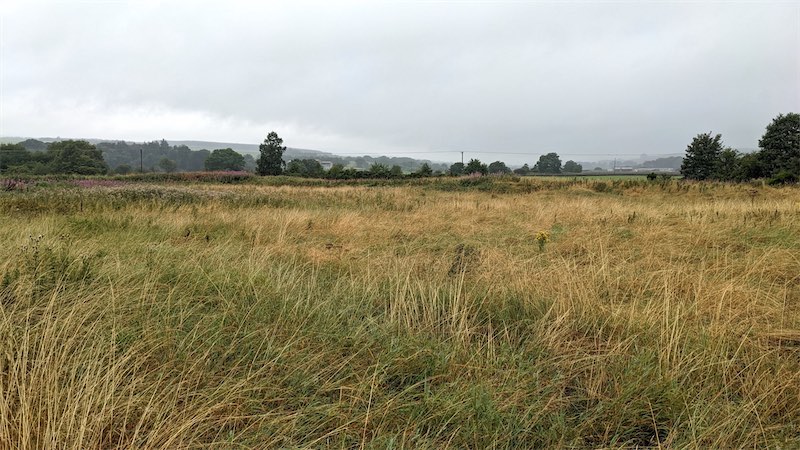
View looking northwest from 'centre spot' towards Crawick Water (not visible in this photo)
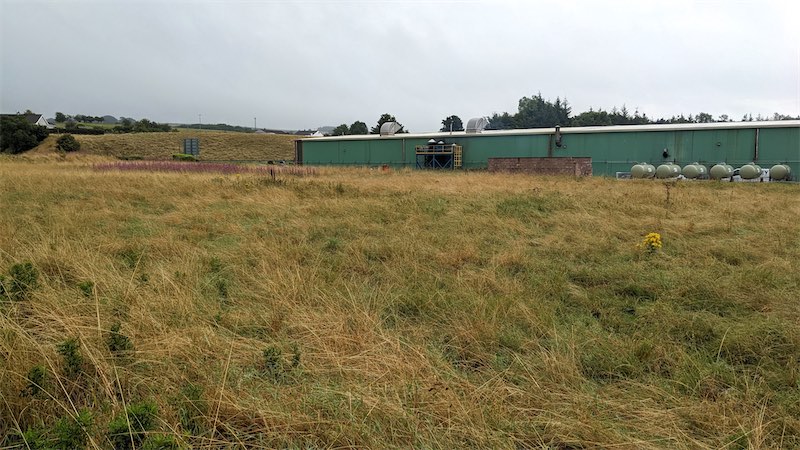
View looking southeast towards 'centre spot' with light industrial unit in background
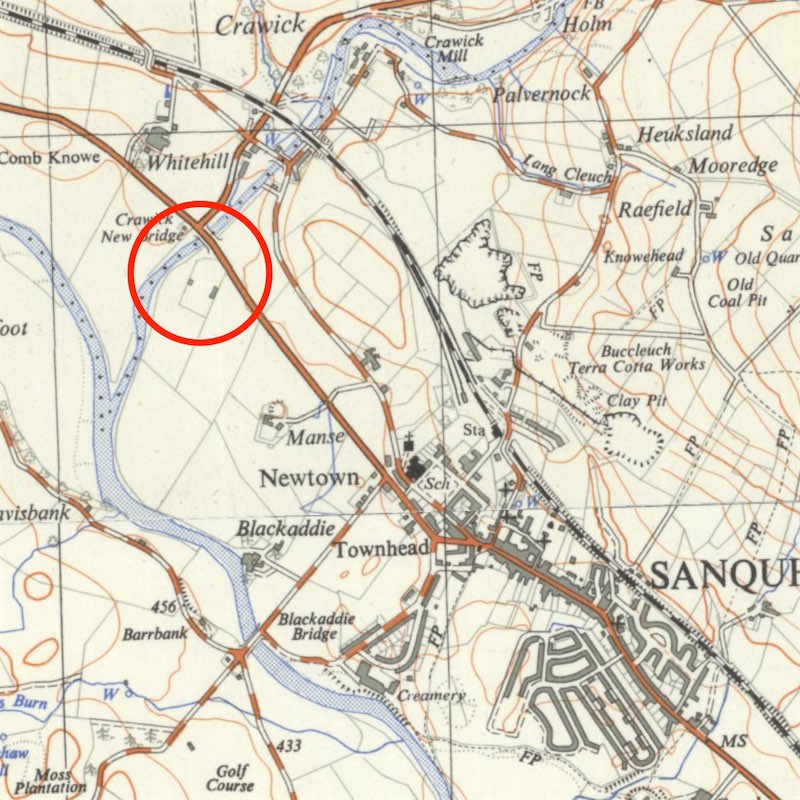
Map excerpt from OS 1:25,000, 1937-61, showing Crawick Holm ground outline
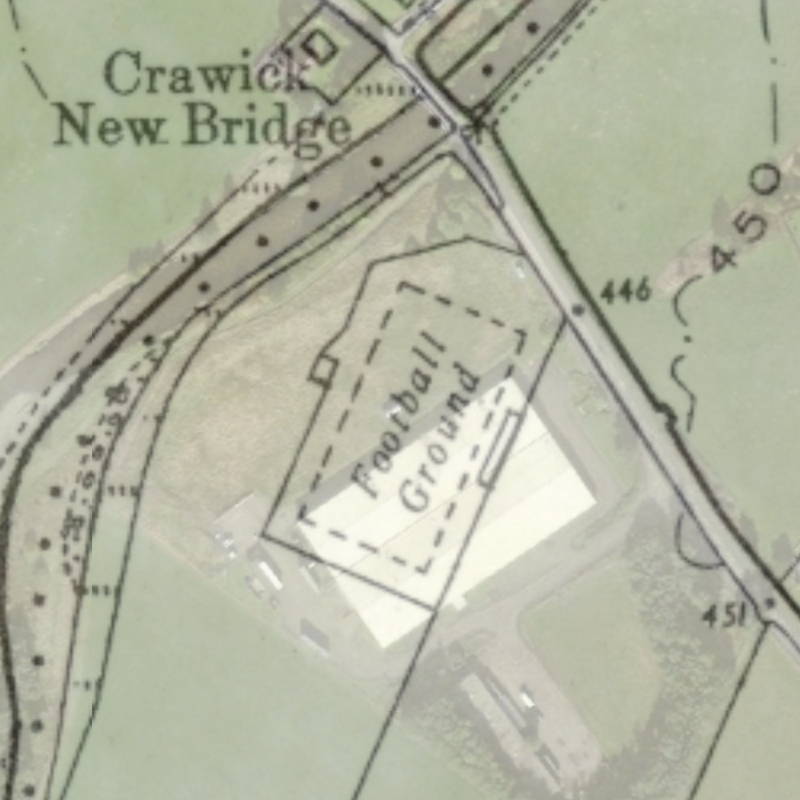
OS 1:25,000, 1937-61, merged with present day aerial photo
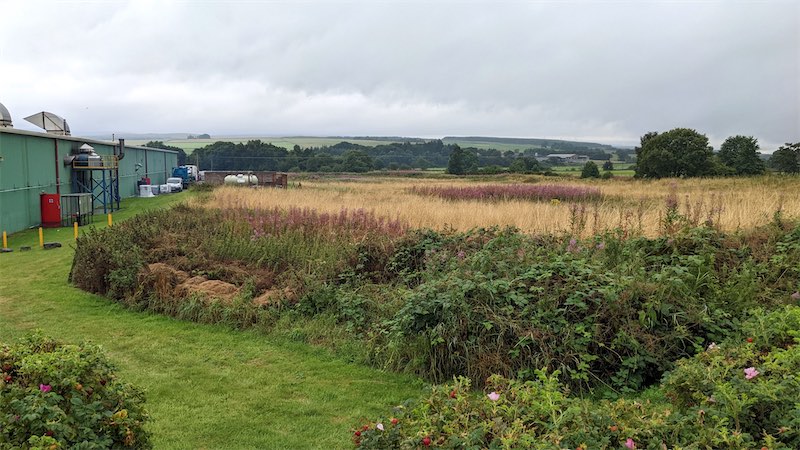
View of the 'pitch' from the side of the A76 Glasgow Road
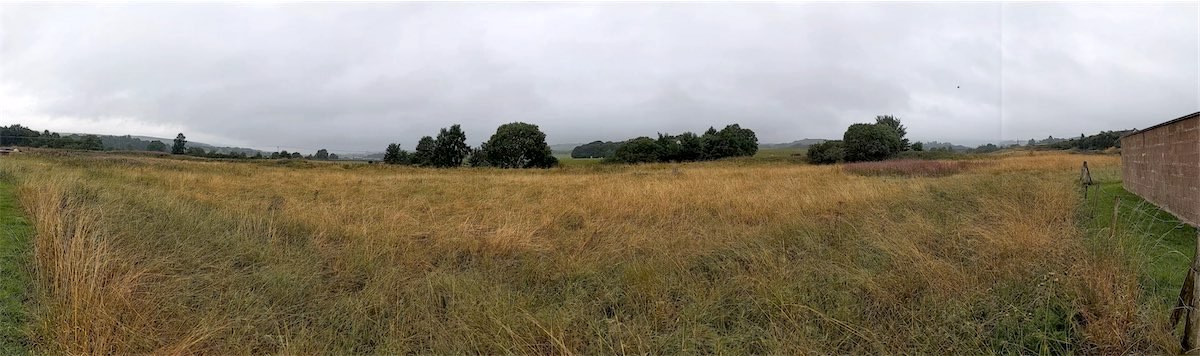
Panoramic view of what's left of the Crawick Holm 'pitch' today
Team
Solway Star FC
Ground
Kimmiter Park Green
Address
Stapleton Road, Annan, DG12 6RX
Population
3,900 (in 1921)
Ground today
Light industrial unit / car park
Kimmiter Park Green was the ground where Solway Star were playing during their time in the Scottish Football League, once in the semi rural eastern outskirts of Annan, but the town has now grown to meet it and the ground itself has changed in a major way. It now exists as a large, open car parking area next to a light industrial unit, I visited on a Saturday morning and this area was out off bounds, gates locked upon and nobody around.
Nelson House, see historic map, still exists on the opposite side of Stapleton Road and, further along the road - it’s a cul-de-sac now, there’s Kimmiter Green, a sandstone property that was once on the edge of the ground and must be the source of the ground name. Incidentally, if you were thinking of visiting the ground site, there are now two Stapleton Roads, the older one, which you can view the ground site from to the east and the more modern one to the east of the ground that provides no view of the former ground. This second, or New Stapleton Road, was built to improve access to and from the A75 when Annan was bypassed in something like 1990.
Not too much to see, but if you are interested in Solway Star, then a trip to nearby Mafeking Place - half a mile to the west - will take you to the site of the ground that Solway Star moved to after their time at Kimmiter Park Green. Not too much to see here either, it’s largely a housing estate from the 1980s or thereabouts, BUT, the still present Annan & District Ex Service Club there was part of the ground facilities back in the day, perhaps the changing rooms and club offices. Check it out.
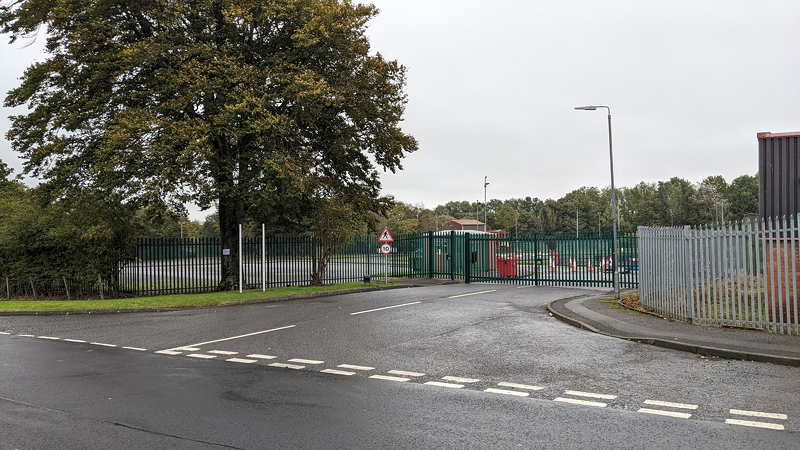
View of the 'ground' from the west side of (Old) Stapleton Road
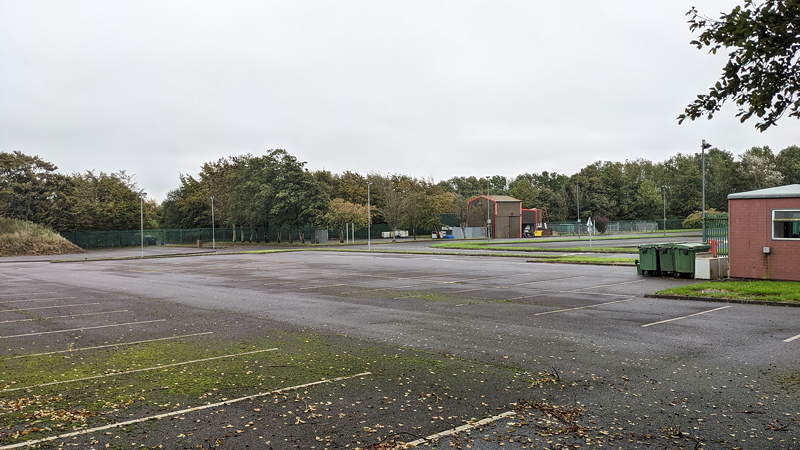
What the Solway Star pitch looks like today
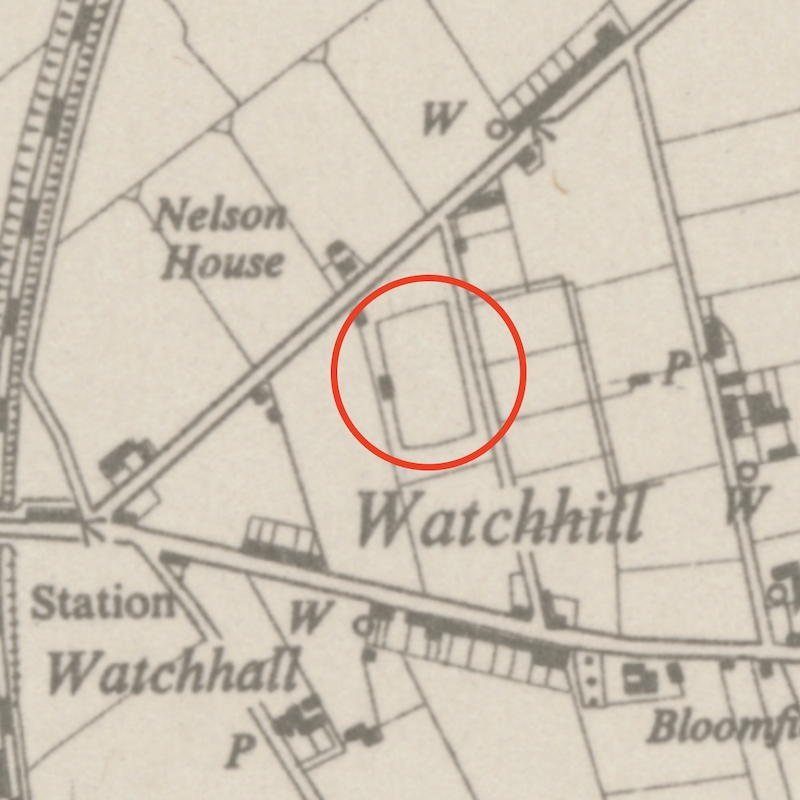
Map excerpt from OS 1:25,000, 1945-65, showing Kimmiter Park Green ground outline
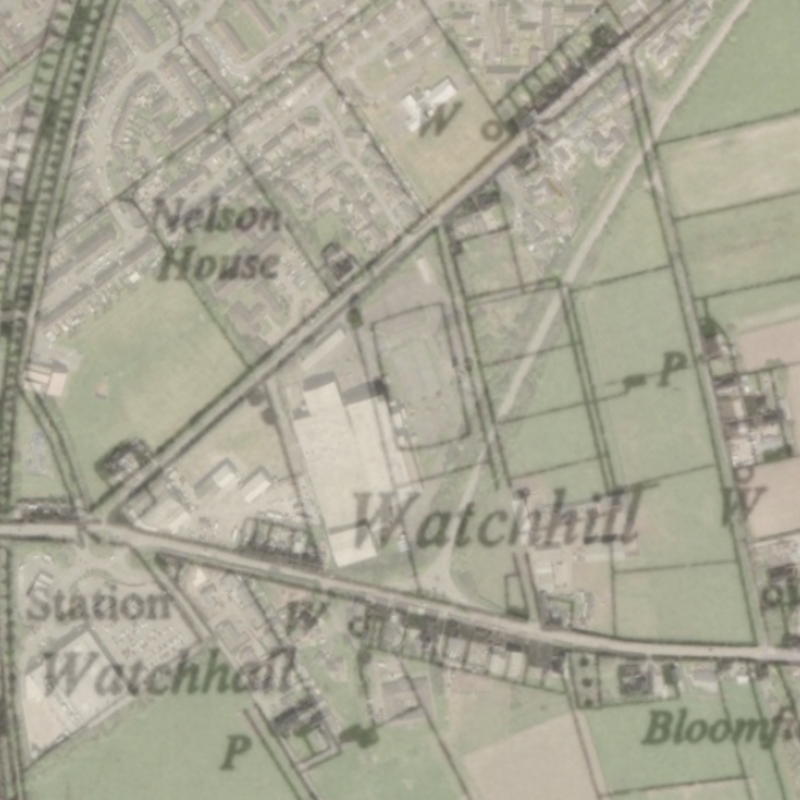
OS 1:25,000, 1945-65, merged with present day aerial photo

The Kimmiter Green property, originally on the north east corner of the ground plot, presumably the reason behind the ground name
Team
Mid-Annandale FC
Ground
Kintail Park
Address
Kintail Park, Lockerbie, DG11 2BB
Population
Around 2,500 (in 1921)
Ground today
Residential estate
Kintail Park was the ground where Mid- Annandale played during their time in Division Three of the Scottish Football League in the 1920s. At the time, it was a patch of open ground to the rear of some houses and bounded to the north by the railway line that ran from Lockerbie to Dumfries. How times have changed, the original houses to the south are still there, but the railway line has gone as has the pitch, replaced by a circa 1970s housing development.
No plaque or similar is visible to commemorate the spot as a football venue that came alive every two weeks as competitive duels were hosted between sides striving to get into Division Two. In fact, the closest thing to a plaque is the street name plate on a house on the corner.

View looking west along Kintail Park

View looking east along Kintail Park
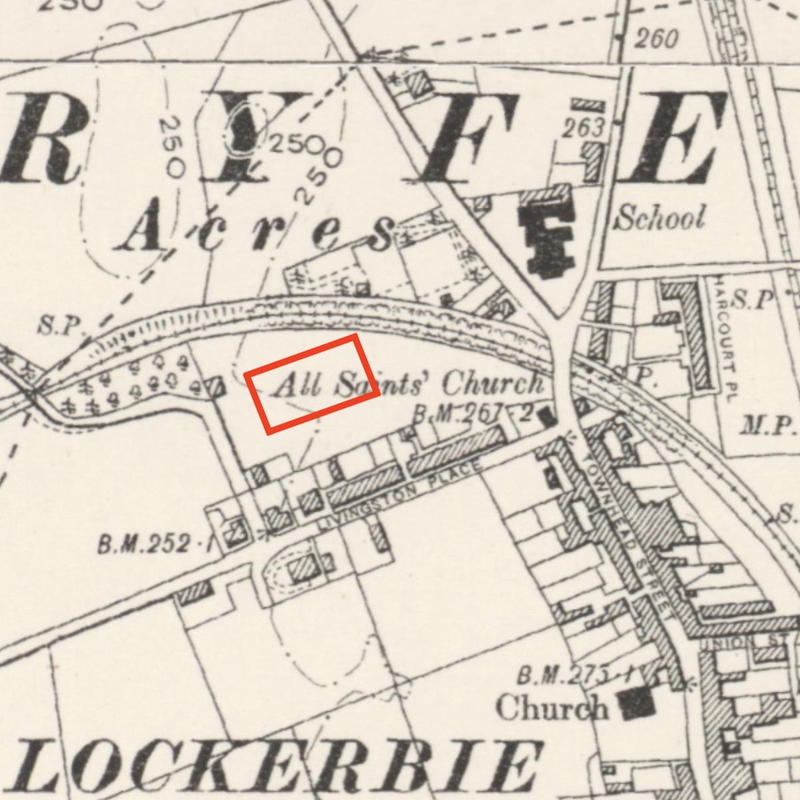
Map excerpt showing likely position of Kintail Park ground

Map merged with present day aerial photo

The only recognition of Kintail Park today, street name plate

Panoramic view of Kintail Park today, grass in short supply